
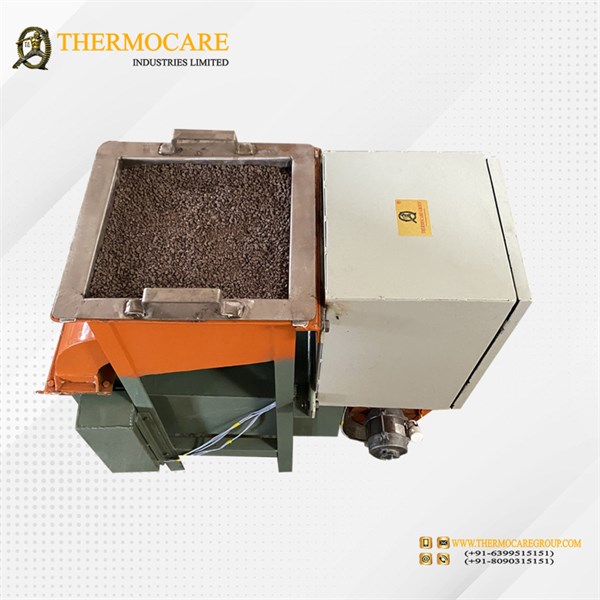
Industrial Dryer, Oven & Roaster
Thermocare's dryer/oven/roaster equipment is offered to remove moisture or support roasting for products suited to the selected process. The company demonstration presents a Supari Dryer and examples including fennel, dates, peanuts, ginger and potato powder. Compatibility, throughput and end point must be evaluated for the actual product, inlet condition, target moisture and heat sensitivity; this equipment is not assumed suitable for every material.
Details published for this page
- M.S. body; exact contact construction and material grade require confirmation.
- 1440 RPM motor with 3-inch gearbox; motor rating and drive arrangement are model-specific.
- Electronic control panel; exact instruments and functions must be confirmed.
The company's video describes diesel- or gas-heating configurations; the selected heat source, burner and project scope must be confirmed in the technical offer.
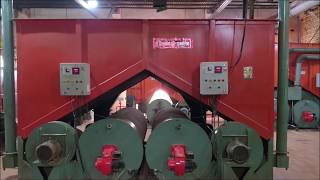
How the industrial dryer works
A dryer removes moisture by applying heat and allowing moisture to leave the product. A roasting process applies a suitable heat profile to reach a required product condition. Thermocare describes this equipment as a dryer, oven and roaster. The company demonstration shows a Supari Dryer; the exact heat-transfer method, airflow, material movement and operating mode depend on the selected configuration.
In a heated drying process, thermal energy is transferred to the product and moisture moves out of it. Depending on the design, a process-air path or a product-handling mechanism may support this transfer. The public page does not specify the complete internal flow path, so the final arrangement should be confirmed against the machine drawing and technical offer.
Process flow to agree before selection
- Characterise the feed: identify the product, inlet condition, moisture, size/form and heat sensitivity.
- Define the target: specify desired outlet moisture or roasting result, how it will be measured, and the required process time or throughput.
- Confirm the machine configuration: agree the operating mode, heat source, material path and site utilities. Thermocare's company video presents diesel- or gas-heating configurations; verify which option applies to the selected model.
- Validate the process: where the application requires it, use representative material and an agreed test method to assess the result before finalising the specification.
Main components and their functions
- Body or enclosure: the current product page lists an M.S. body. Contact-part material, grade, thickness, insulation and cleanability are not specified there and should be documented for the selected model.
- Motor and gearbox: the page lists a 1440 RPM motor with a 3-inch gearbox. Motor power, reduction ratio, driven mechanism and duty are not stated and must be confirmed in the technical offer.
- Electronic control panel: listed on the page as part of the product. The exact controls, instruments, temperature measurement, timers, interlocks and automation scope are not published.
- Heating arrangement: the official company demonstration describes diesel- or gas-heating configurations. Confirm the selected fuel, heat source, burner scope, utilities, exhaust and safeguards for the project.
- Product loading, movement and discharge: these depend on whether the offered design is batch or continuous and on the material-handling arrangement. Confirm the feed points, residence-time method and discharge route from the approved drawing.
- Air or heat-flow path: the exact circulation, distribution and exhaust arrangement is model-specific. Do not assume a fan, duct, sensor or recirculation feature unless it appears in the approved scope.
Construction and configuration
The live product page currently lists an M.S. body, 1440 RPM motor with 3-inch gearbox and electronic control panel. These points are not a complete datasheet. Confirm contact construction, body and insulation details, heating source, burner and control scope, installed power or fuel needs, operating mode, dimensions, loading/discharge arrangement, cleaning access, guards and site services in the project quotation and approved drawing. This page is an application guide, not a machine specification or performance guarantee.
Products and suitability
Thermocare's demonstrations include supari and examples such as fennel, dates, peanuts, ginger and potato powder. The dryer/roaster is also used for grains and pulses and can process other granular products. These applications do not guarantee one setting, capacity or result for every product. Product size, initial moisture, heat sensitivity, target moisture or roast, feed consistency and operating conditions affect selection.
Information needed for a useful enquiry
- Product name and a representative sample or clear photos/video.
- Inlet moisture and the target moisture or roasting outcome, including the measurement method.
- Required batch size or hourly throughput and operating schedule.
- Heat sensitivity, product quality limits and any cleaning/changeover requirements.
- Preferred or available heating fuel and site utilities.
- Available installation space, loading and discharge arrangement, and connected equipment.
Operation and safety considerations
Follow the model-specific operating and maintenance instructions supplied with the machine. For a fuel-fired configuration, confirm fuel, ventilation/exhaust, site compliance, emergency provisions and the complete safety scope with Thermocare before installation. Do not infer an included sensor, automatic shutoff or protective device from this general page; the approved technical documents govern the delivered configuration.
India-wide and export enquiries
Thermocare is based in Kanpur, Uttar Pradesh, and welcomes dryer enquiries from industrial buyers across India. Export enquiries for the UAE (including Dubai), Nepal, Sri Lanka, the United States and other markets are reviewed individually for technical scope and logistics.
Frequently asked questions
What does an industrial dryer, oven or roaster do?
Thermocare's product page describes equipment for removing moisture and for roasting suitable products. The intended product condition and process need to be defined before configuration is selected.
Which products are shown for this dryer?
The company demonstration is for a Supari Dryer and names fennel, dates, peanuts, ginger and potato powder as examples. Suitability and results for a specific material must still be evaluated.
How does the dryer remove moisture?
Heat supports moisture transfer from the product; the machine's heat and material-handling path then support moisture removal. The exact process-air and product-flow arrangement depends on the model and should be confirmed from its technical documents.
Is this dryer available with diesel or gas heating?
The official Thermocare demonstration describes diesel- or gas-heating configurations. Confirm the exact fuel, heater, burner, utilities and safety scope for the model being quoted.
Can the same model dry and roast every product?
No universal compatibility or outcome is implied. Product properties, heat sensitivity, moisture, desired roast, machine configuration and operating conditions must be reviewed for each application.
What details are listed for the machine?
The current page lists an M.S. body, a 1440 RPM motor with a 3-inch gearbox and an electronic control panel. Motor power, contact-part grade, temperature range, capacity and control functions are not specified on this page; refer to the project quotation and approved drawing.
Why can capacity not be selected from product weight alone?
The evaporation load depends on inlet and target moisture, product properties, heat sensitivity, operating conditions, machine configuration and available process time. A technical review needs these details, not just a weight figure.
Is drying temperature the same as product temperature?
Not necessarily. Process air, chamber and product temperatures can differ. Define the relevant temperature limit and measurement location during process design.
What should I share to start a quotation?
Share the product, inlet and target moisture, desired drying or roasting result, batch size or throughput, heat sensitivity, preferred fuel, site utilities and installation constraints. A sample or trial may be useful for an application that needs validation.
Can I enquire about an industrial dryer for Delhi NCR, Mumbai/Maharashtra or another Indian city?
Yes. Thermocare is based in Kanpur and welcomes dryer enquiries from across India. Share the product, initial/target moisture and drying or roasting goal for a review.
Discuss your dryer requirement: Share the material, inlet and target moisture, heat sensitivity, batch size and desired process result. Contact Thermocare, call +91 79916 56592 or +91 96705 15151, or WhatsApp +91 79916 56592 / +91 96705 15151.